
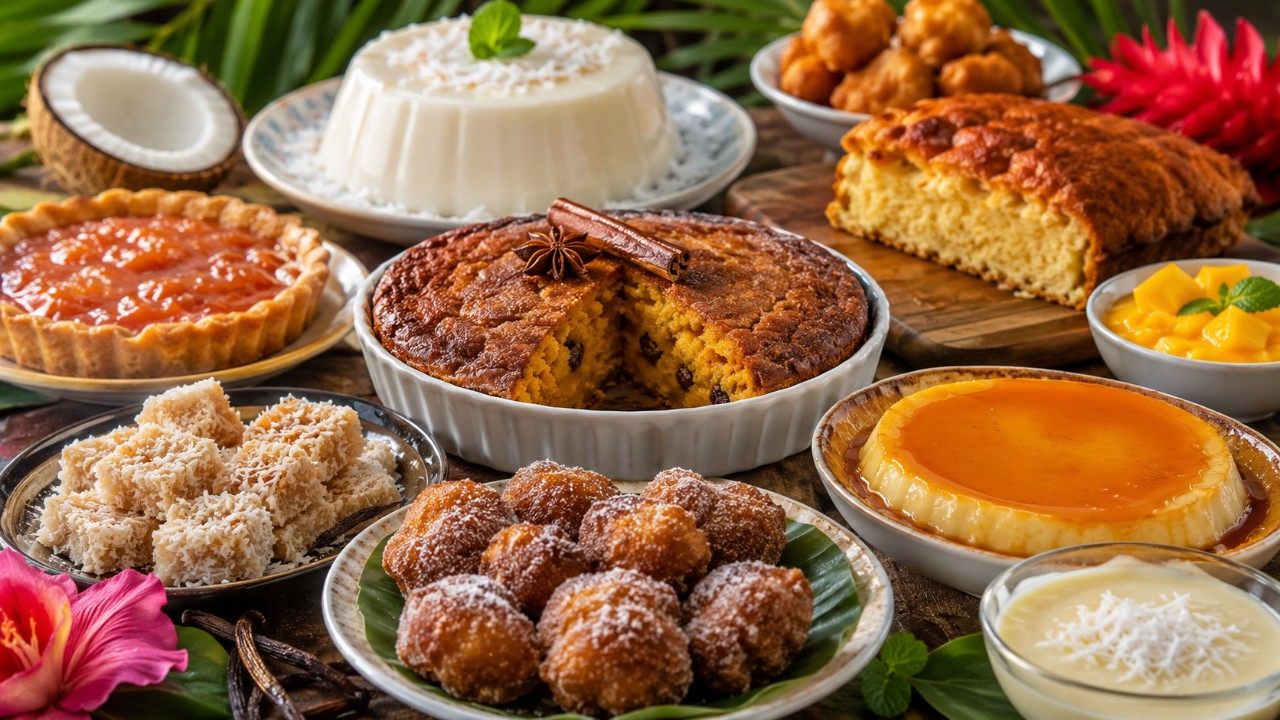
15 Must-Try Creole Desserts
Creole cuisine is celebrated for its bold savory dishes, but its desserts are equally remarkable. Influenced by African, French, Indigenous Caribbean, Indian, and Asian culinary traditions, Creole sweets combine local ingredients such as coconut, sweet potatoes, cassava, bananas, vanilla, cinnamon, rum, and tropical fruits into unforgettable treats.
Whether enjoyed during holidays, family gatherings, or everyday celebrations, these desserts are an essential part of Creole culture.
Here are 15 desserts every food lover should experience.
1. Pain Patate (Haiti)
One of Haiti's most beloved desserts, Pain Patate is a sweet potato pudding baked with coconut milk, cinnamon, vanilla, raisins, butter, and warm spices.
Unlike traditional bread, it has a dense, moist texture similar to a rich cake.
It is especially popular during Christmas and New Year's celebrations.
Main Ingredients
- Sweet potatoes
- Coconut milk
- Brown sugar
- Cinnamon
- Vanilla
- Nutmeg
- Raisins
2. Blanc-Manger Coco (Haiti & French Caribbean)
This silky coconut pudding reflects the French influence on Creole cuisine.
Made with coconut milk, sugar, vanilla, and gelatin, Blanc-Manger is often served chilled with grated coconut or tropical fruit.
It is light, refreshing, and perfect after a hearty meal.
3. Bonbon Sirop (Haiti)
Bonbon Sirop is a traditional Haitian fried pastry coated in a fragrant sugar syrup flavored with ginger, cinnamon, star anise, or vanilla.
Its crisp exterior and sticky glaze make it a favorite during festivals and family celebrations.
4. Tablette Coco (Haiti)
Simple yet irresistible, Tablette Coco combines freshly grated coconut, sugar, spices, and vanilla to create crunchy coconut candy.
Different regions prepare white, golden, or dark caramelized versions.
5. Tourment d'Amour (Guadeloupe)
Originating from the island of Les Saintes, Tourment d'Amour is a small tart filled with coconut jam, guava, pineapple, or banana.
Its buttery pastry and tropical filling make it one of Guadeloupe's signature desserts.
6. Flan Coco (Martinique & Guadeloupe)
A Caribbean twist on classic French flan, Flan Coco blends creamy custard with rich coconut milk for a smooth, velvety dessert often topped with caramel.
7. Banana Fritters
Found throughout the Caribbean, banana fritters transform ripe bananas into crispy golden treats dusted with sugar or served with honey.
They are enjoyed for breakfast, dessert, or as an afternoon snack.
8. Cassava Pudding
Cassava has long been an important staple in Creole cooking.
Grated cassava is baked with coconut milk, spices, sugar, and butter into a rich pudding that varies from island to island.
9. Coconut Tart
Popular across Haiti and the French Caribbean, Coconut Tart combines flaky pastry with a sweet coconut filling infused with vanilla and cinnamon.
It is frequently served at bakeries, family gatherings, and holidays.
10. Gateau Ananas (Pineapple Cake)
Fresh Caribbean pineapple gives this soft cake its naturally sweet flavor.
Often served during birthdays and celebrations, it showcases one of the region's most abundant tropical fruits.
11. Mango Sorbet
Made with ripe Caribbean mangoes, fresh lime juice, and a touch of sugar, this refreshing frozen dessert perfectly captures the flavors of the tropics.
12. Breadfruit Fritters
Although breadfruit is commonly used in savory dishes, some Creole communities prepare sweet fritters flavored with cinnamon, vanilla, and sugar.
The result is crisp on the outside and soft inside.
13. Coconut Bread
This lightly sweet bread combines shredded coconut with butter and warm spices.
Served with coffee or hot chocolate, it is popular for breakfast and afternoon tea.
14. Rum Cake
Influenced by French and Caribbean baking traditions, Rum Cake combines butter, vanilla, dried fruit, and locally produced rum.
It is often prepared during Christmas and other festive occasions.
15. Sweet Potato Beignets
These fluffy fried pastries combine mashed sweet potatoes with flour, cinnamon, nutmeg, and vanilla before being dusted with powdered sugar.
They are a comforting dessert enjoyed across several Creole communities.
The Common Ingredients Behind Creole Desserts
Although every island has its own specialties, many desserts share similar ingredients.
Popular flavors include:
- Coconut
- Vanilla
- Cinnamon
- Nutmeg
- Lime
- Sweet potatoes
- Cassava
- Bananas
- Mangoes
- Pineapple
- Brown sugar
- Rum
These ingredients reflect the tropical climate and agricultural traditions of Creole-speaking regions.
Desserts That Bring Families Together
Creole desserts are often associated with celebrations.
Many are prepared for:
- Christmas
- New Year's Day
- Easter
- Weddings
- Baptisms
- Family reunions
- Community festivals
Recipes are frequently passed down through generations, with each family adding its own unique touch while preserving cherished traditions.
Traditional Culinary Notes
Traditional Haitian cookbooks include recipes for classic desserts such as Pain Patate, Blanc-Manger, Bonbon Sirop, and Tablette Coco, highlighting the importance of coconut, sweet potatoes, sugar, spices, and tropical ingredients in Haitian pastry traditions. These desserts continue to play an important role during holidays and family celebrations.
Fun Facts
- Coconut appears in dozens of traditional Creole desserts.
- Sweet potatoes are used in both savory dishes and desserts.
- Many recipes reflect a blend of African ingredients and French baking techniques.
- Rum is a popular flavoring in holiday cakes throughout the Caribbean.
- Family dessert recipes are often treasured heirlooms passed from one generation to the next.
Frequently Asked Questions
Which dessert is considered Haiti's most famous?
Many people consider Pain Patate to be Haiti's signature dessert, especially during the Christmas season.
Are Creole desserts very sweet?
Most are moderately sweet and rely on natural flavors from tropical fruits, coconut, and warm spices rather than excessive sugar.
Can these desserts be found outside the Caribbean?
Yes. Many Caribbean bakeries and restaurants in cities with large Creole communities—including Montreal, Miami, New York, Paris, and London—serve traditional Creole desserts.
Why Creole Desserts Matter
Creole desserts are more than delicious treats—they preserve stories, traditions, and cultural identity. Every recipe reflects generations of creativity, resilience, and celebration, bringing families together through flavors that have stood the test of time.
Whether enjoyed after a festive holiday meal or shared with friends over coffee, these desserts continue to showcase the warmth and hospitality that define Creole culture.