
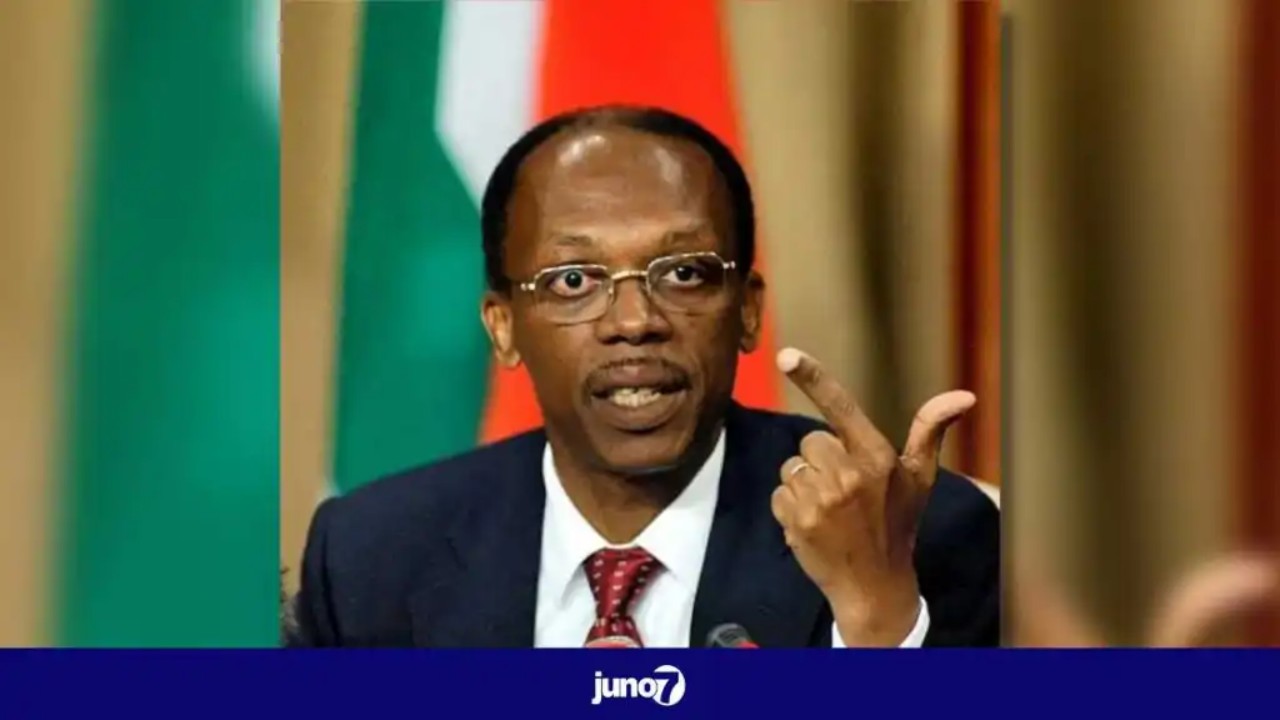
Each anniversary of Aristide is a mirror. It no longer measures a man. It measures our inability to break the circle: the misery that makes the country ungovernable, and the weapons that ended up governing it.
My full op-ed is online. Tell me what you take from it.
By Aly Acacia
Every July 15 brings back the same ritual. We celebrate the birthday of Jean-Bertrand Aristide, born on July 15, 1953 in Arniquet, and we sum up his legacy in one word: polarizing. An emblematic figure of the democratic transition begun after 1986, he remains, more than three decades after his accession to the presidency, one of the most influential but also most controversial figures on the Haitian political scene.
Polarization did not begin with Aristide
To say that Aristide polarized Haiti is to let people believe that Haiti was united before him. Yet Haitian society is itself a formidable polarizing machine, built on total inequality: land concentration, educational exclusion, a state confiscated by a small urban minority, a rentier economy.
Aristide did not invent this fracture; he names it, mobilizes it, and for part of the population, he embodies it. The Lavalas movement was the first time that working-class neighborhoods, grassroots organizations, and peasants entered the electoral arena en masse. Obviously, this frightened those who were used to governing without them. The polarization attributed to him is first of all the brutal revelation of a social polarization that was contained by the dictatorship.
That is why today's debate goes in circles: we judge a man for a fracture that is structural.
Robert Fatton's work is particularly interesting because it does not exonerate Aristide, but also refuses to explain the Haitian crisis solely through his person. It places the phenomenon back in the long history of social fractures, class rivalries, and the chronic weakness of Haitian institutions.
My goal, dear compatriots, is to better understand Aristide as a historical figure, and to understand why he mattered so much to poor Haitians.
Before being a president, Aristide is a social phenomenon. In the 1980s, his word resonated in working-class neighborhoods as few public voices had done before. A priest of liberation theology, he denounced privileges, exclusion, and political violence in a language understood by those who had never had access to circles of power. For millions of Haitians, Aristide was not just a candidate: he was the first national figure to tell them that their lives counted politically.
This may be his most lasting legacy. Long before debates about the Chimères or about his exercise of power dominated analyses, Aristide placed the social question at the center of Haitian politics. After him, no political actor can govern as if working-class neighborhoods, peasants, and the excluded did not exist. His eventual failure to transform this mobilization into lasting institutions does not erase the fact that he changed the country's political agenda.
Judging Aristide solely on the basis of his internal errors (his vengeful apology for Pè Lebrun, his imprudent metaphor of 'Wòch nan dlo') also amounts to forgetting the context in which he governed. The 1991 coup d'état, the years of exile, international sanctions, confrontations with the political opposition, the chronic fragility of the state, and external pressures considerably limited his room for maneuver. These constraints do not erase his responsibilities, but they prevent reducing his record to his bad decisions alone.
This avoids a reading in which Aristide would be presented as solely responsible for the trajectory of the post-Duvalierist transition.
Aristide remains a Haitian contradiction in himself. He helped to place the question of the poor at the heart of political life. But he also participated in disastrous practices of power whose consequences continue to weigh on the country.
His legacy therefore cannot be summed up either by the word 'savior' or by the word 'polarizing.' The real question is rather this: how did a man who succeeded in bringing the excluded into Haitian political history fail to transform this popular conquest into institutions capable of surviving his own fall?
This, in my view, may be where Aristide's true record lies: not the man who created Haiti's fractures, but the one who revealed them, mobilized them, and, at times, worsened them without managing to resolve them.
Some researchers, notably Alex Dupuy, Robert Fatton Jr., Laënnec Hurbon, as well as several works on political violence in Haiti, consider that Aristide's entourage and Fanmi Lavalas encouraged or instrumentalized armed groups from working-class neighborhoods that gradually acquired their own autonomy. Other authors insist more on the context of destabilization, the 1991 coup d'état, the embargo, the weakening of the state, the dissolution of the army, and external interventions to explain the emergence of these groups.
For his part, Laënnec Hurbon and several analyses of political violence in Haiti emphasize that the use of non-institutional armed groups is part of an older tradition in which political and economic power delegates part of its coercive force to actors outside the state. The Chimères therefore do not emerge from a historical vacuum.
The most serious criticism addressed to Aristide may not concern polarization. It concerns the nature of the exercise of power. Unfortunately, no successor has done much better.
Chimères: a political response that undid the state?
Gangs were not born under Aristide, but the turn of the 2000s marked a threshold with the rise of the Chimères: groups from working-class neighborhoods, linked to Lavalas bases, used both to mobilize, intimidate, and control territories.
Unlike the centralized violence under Duvalier, this violence becomes diffuse, fragmented, and local. Little by little, these structures gain their autonomy. A strategy of political survival in a drained state or the beginning of a privatization of violence? Probably both.
Even the readings most favorable to Aristide admit that these groups ended up escaping their protectors, initiating the mutation of 'baz' into autonomous criminal organizations. Not to mention a delinquent fringe of the business class, today under international sanctions.
On this point, research agrees: the Chimères are neither a myth nor a media invention. For Fatton, Dupuy, or Hurbon, they embody a para-state drift that weakened the state. For others, they are above all the product of an extreme context: coup d'état, embargo, dissolution of the army. The debate remains open.
Every July 15, in reality, Haitian society stands before its mirror. Ultimately, this anniversary no longer evaluates a man. It measures our inability to break a circle: the misery that makes the country ungovernable, and the weapons that ended up governing it.